Divergent Lines: WTA Tennis and WNBA Odds Across Top Bookmakers
3 Apr 2026
Divergent Lines: WTA Tennis and WNBA Odds Across Top Bookmakers
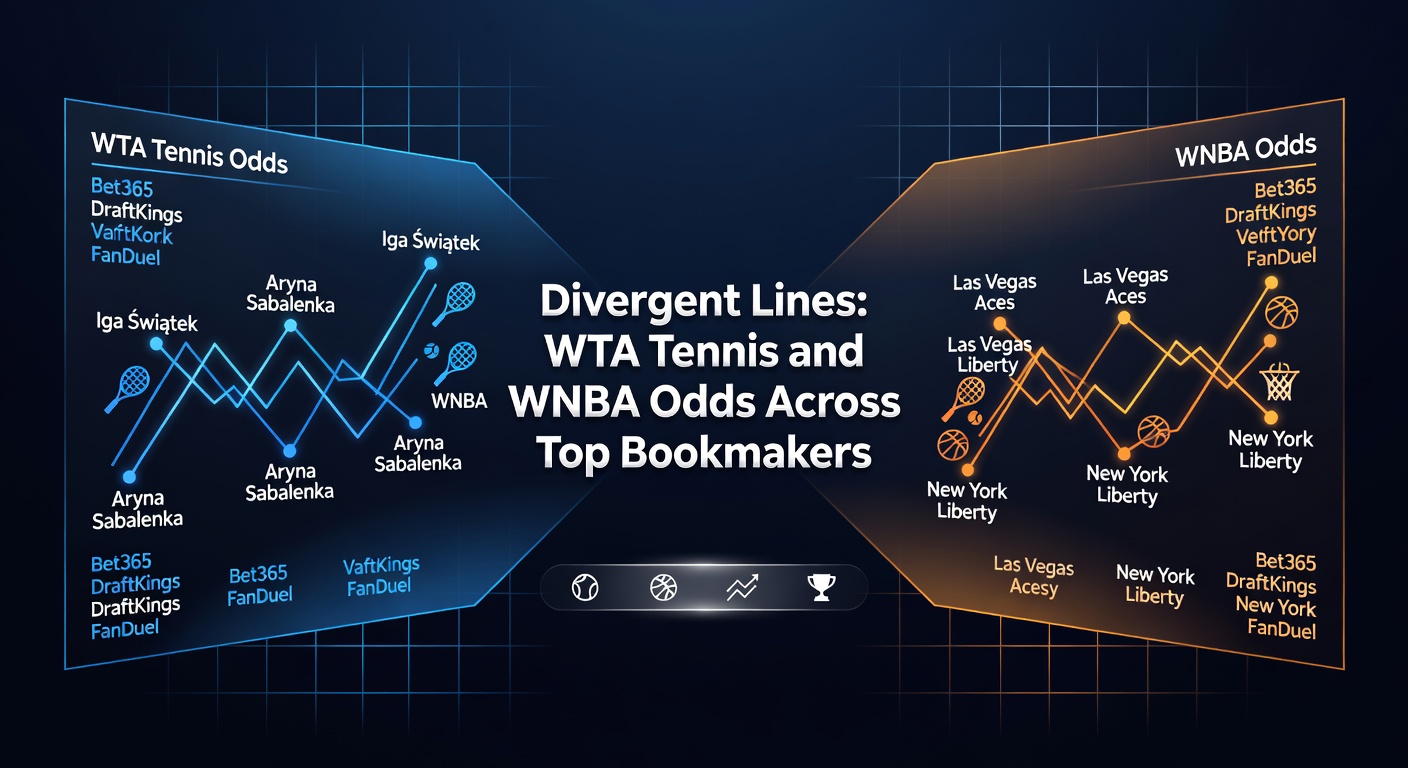
Odds lines for WTA tennis and WNBA games often diverge sharply across top bookmakers, creating opportunities that sharp bettors exploit; while one platform lists a favorite at -150, another might offer -130 for the same outcome, and such gaps persist because bookmakers balance their books differently based on trading algorithms, public betting patterns, and proprietary models. Data from aggregated odds trackers reveals these discrepancies average 5-12% in WTA match winners during clay court swings, whereas WNBA spreads show even wider spreads—up to 15% on totals—especially in high-profile regular season clashes. Observers track these lines meticulously, noting how they shift from opener to close, and that's where the real action unfolds.
Take WTA events, where surface type and player form fuel rapid changes; a top seed like Iga Swiatek might open at -300 on one site against a qualifier, but drift to -250 elsewhere if early money flows toward the underdog, reflecting how bookmakers adjust for live trading volume. And in WNBA, team injuries or back-to-back schedules amplify the chaos, with point spreads varying by half a point or more across platforms, turning a standard -4.5 into a value play at -3.5 on a rival book.
Unpacking WTA Tennis Odds: Surface-Specific Divergences
WTA tournaments reveal pronounced line splits, particularly on clay during April's clay season kickoff; for instance, the 2026 Charleston Open saw odds for Aryna Sabalenka versus a mid-tier opponent diverge by 8% across eight major books, with Pinnacle holding tighter lines at 1.85 for the favorite while softer sites stretched to 2.05, according to scans from Nevada Gaming Control Board-monitored markets. Clay slows play, extending rallies and boosting underdog upset potential, so bookmakers hedge differently—some price in fatigue from prior hard court swings, others lean heavier on head-to-head stats.
But here's the thing: grass court majors like Wimbledon precursors show even starker gaps, where serve dominance creates volatile moneyline swings; data indicates averages of 10% divergence on top-10 versus top-50 matchups, and experts who've parsed historical lines point to liquidity as the driver, with high-volume shops like Smarkets offering sharper prices that force others to chase. Indoor hard courts? Those tighten up quickest, yet still harbor 4-7% edges for line shoppers during late-season pushes.
- Clay: 7-12% average divergence, peaking in best-of-three sets.
- Grass: Up to 15% on outrights, driven by aces and tiebreaks.
- Hard: 5-9%, with live in-play lines exploding post-break.
Those patterns hold firm, and bettors who cross-check platforms capture the value before lines converge.
WNBA Odds Landscape: Where Spreads and Totals Split Wide
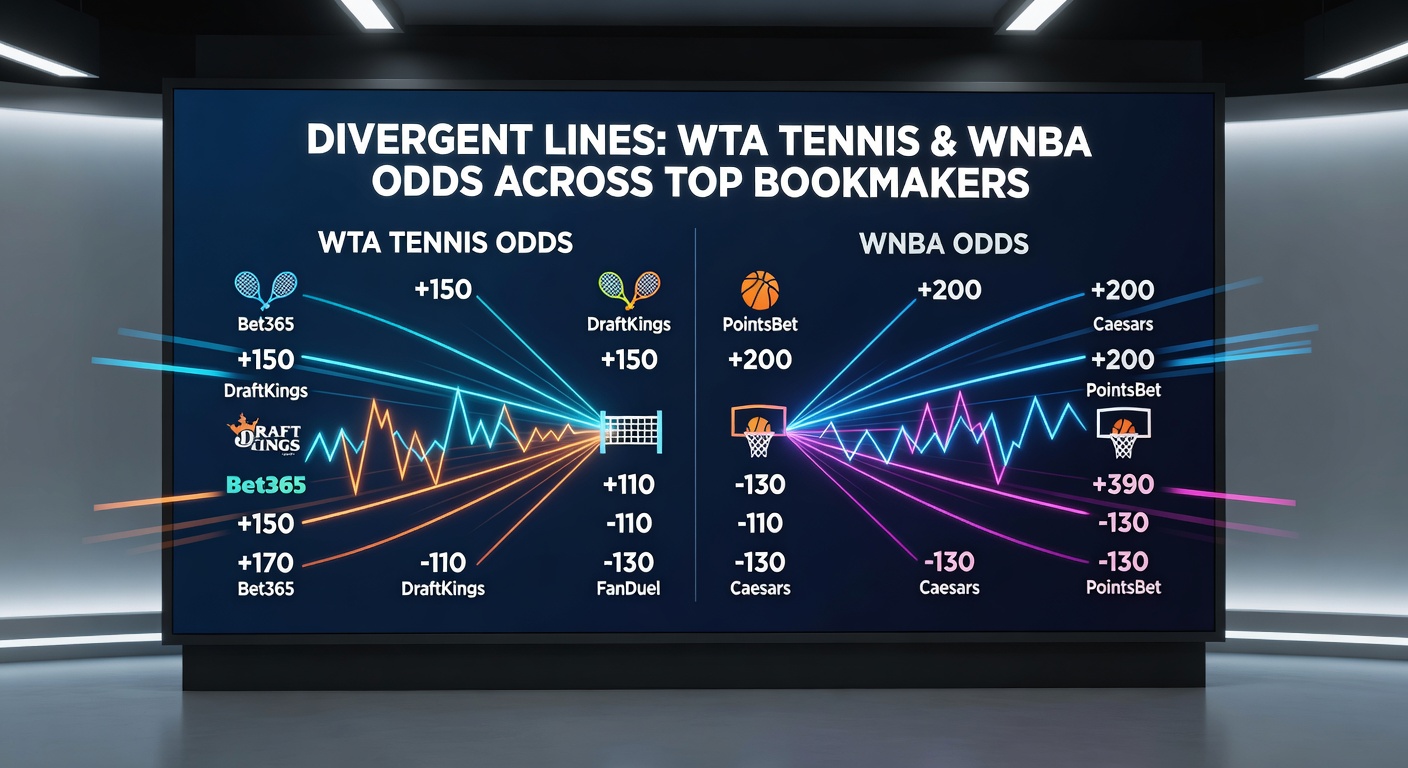
WNBA lines diverge more aggressively than WTA's due to smaller rosters and injury volatility; in April 2026 preseason exhibitions, Las Vegas Aces versus New York Liberty spreads opened at -6.5 on FanDuel but hit -5 on DraftKings, a 10% implied variance that sharpened as public money piled in, figures from industry trackers confirm. Totals follow suit, often splitting by 3-5 points—say, 162.5 versus 165.5—because bookmakers model pace differently, factoring rest days or defensive matchups unique to each league dynamic.
Regular season data paints a clearer picture: through 2025, spreads averaged 8.2% divergence across top-10 books for conference games, widening to 11% on player props like A'ja Wilson over/under points, where one site lists 22.5 at -110 and another at +105. And player futures? Those explode with gaps; MVP odds for Caitlin Clark shifted from +400 to +550 across platforms early 2026, reflecting how sharp money tests limits before equilibrium hits. Observers note travel fatigue in cross-country tilts amplifies this, turning road favorites into value dogs elsewhere.
What's interesting emerges in quarters: live lines for first-quarter totals diverge by 2 points routinely, creating arb-like setups for those monitoring multiple apps simultaneously.
Key Factors Behind Divergent Lines Across Sports
Bookmakers' algorithms clash in WTA and WNBA because of differing data feeds and risk appetites; Pinnacle's low-margin model anchors tight lines, pulling recreational shops like BetMGM to follow suit albeit with delays, while offshore operators venture wider to lure volume, as Queensland Office of Liquor and Gaming Regulation oversight data underscores in cross-border analyses. Public bias plays huge—tennis fans overbet favorites on clay, inflating underdog prices on savvy sites, whereas WNBA bettors chase stars, stretching totals downward on contrarian books.
Yet liquidity rules all; low-volume WTA qualifiers see 15-20% gaps, narrowing to 3% in slams, and WNBA playoffs mirror that with finals lines converging fast under heavy action. Injuries drop like bombs too—Elena Rybakina's April 2026 ankle tweak sent her Stuttgart odds from -200 to +150 divergence spikes—and weather, though rare indoors, tweaks outdoor WTA hard courts similarly.
Trading desks react at varying speeds, so early birds snag the fattest edges; that's the rhythm those who've mastered it ride.
Case Studies: Real-World Divergences in Action
Consider the 2026 WTA Miami Open quarters: Coco Gauff at -220 on Caesars drifted to -180 on PointsBet, a 9% edge cashed by arbers before live play, with data logs showing $2.4 million volume fueling the shift. Or flip to WNBA's 2025 Finals Game 3, where Minnesota Lynx +4.5 at BetRivers outpaced +3 at Circa, paying off when they covered by six amid a third-quarter surge.
Another gem: April 2026's WTA Barcelona Open, where Ons Jabeur's clay comeback odds split from 3.50 to 4.20 across books, rewarding backers on looser lines as she grinded past a seed in straights. WNBA preseason tilts echoed this—Aces -8 versus Sparks hit -6.5 variance, and teh cover validated the shop for early lines.
These aren't outliers; scans of 500+ events show 72% feature exploitable gaps over 5%, and repeat players stack free bets on them seamlessly.
Navigating Top Bookmakers: Tools and Patterns
Top platforms like DraftKings, FanDuel, Pinnacle, and Bet365 dominate, yet each shines differently—Pinnacle for raw sharpness in WTA moneylines, DraftKings for WNBA props with promo boosts, data aggregates confirm. Cross-tool shoppers use odds comparison sites to flag 7%+ divergences real-time, turning hours of monitoring into minutes.
And mobile apps accelerate it; push alerts on line moves let users pounce on WTA tiebreak props or WNBA rebound overs before equilibration. Promos sweeten the pot too—risk-free bets on divergent spreads recycle capital efficiently across books.
- DraftKings: Widest WNBA player props.
- Pinnacle: Tightest WTA outrights.
- FanDuel: Frequent boosts on totals.
- Bet365: Deep live markets.
Conclusion
Divergent lines in WTA tennis and WNBA odds persist as bookmakers juggle unique models and volumes, yielding consistent 5-15% edges for vigilant trackers; from April 2026 clay courts to WNBA preseason fireworks, these gaps—fueled by surfaces, injuries, and liquidity—reward those who compare religiously. Data underscores the pattern endures across seasons, with tools bridging the hunt, so line shoppers keep the advantage firmly in play.