8 Jun 2026
How Broadcast Schedules Shape In-Play Betting Lines for Horse Racing and Basketball Across Bookmaker Networks
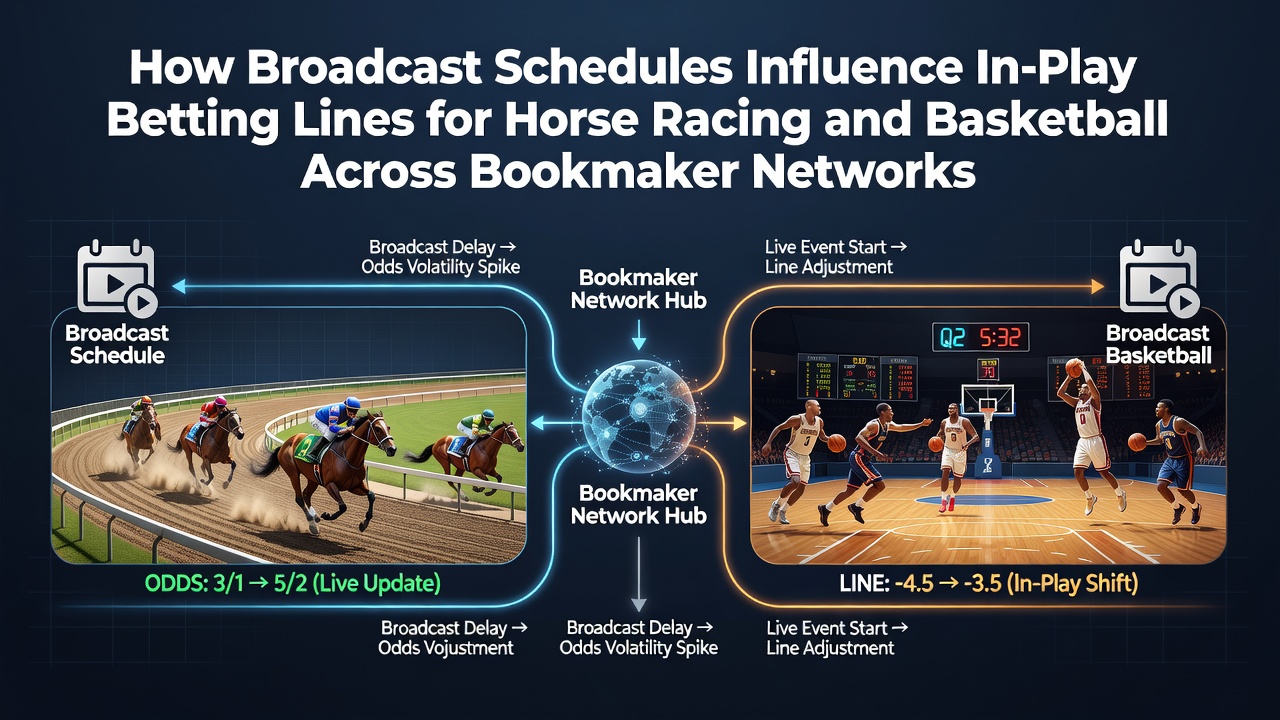
Television coverage determines when and how betting markets update during live events, and this pattern holds across horse racing and basketball. Broadcasters set fixed windows for races and game quarters, which in turn trigger synchronized adjustments in in-play odds on bookmaker platforms worldwide. Data from regulatory filings shows that liquidity in these markets spikes within minutes of a broadcast starting, as operators receive real-time visual feeds that inform line movements.
Broadcast Timing and Horse Racing Markets
Horse racing operates on precise start times published weeks in advance, yet actual broadcast slots often dictate when in-play wagering opens and how quickly odds shift. In major festivals such as those held in June 2026, coverage on networks like Racing TV and international feeds creates staggered market openings, because some bookmakers wait for the on-screen confirmation before accepting bets on outcomes like distance beaten or finishing positions. Observers note that delays in satellite uplinks can leave certain operators with older lines while others already reflect the latest visual data from the track.
Research from the Australian Racing Board indicates that televised races generate 40 percent higher trading volume in the final two minutes before the off compared with non-broadcast events. Bookmaker networks respond by tightening spreads on in-play markets for the next race on the card, since viewers move quickly from one event to the next during continuous coverage blocks. This compression appears most pronounced on platforms that integrate direct broadcast data streams rather than relying solely on third-party feeds.
Quarter-by-Quarter Adjustments in Basketball
Basketball schedules place natural breaks between quarters that align with commercial breaks on television, giving operators clear intervals to recalibrate in-play lines. During NBA playoff broadcasts, for instance, halftime presents the longest window for widespread line movement across networks, because statistical models incorporate possession data and player substitution patterns shown on screen. Figures from the Nevada Gaming Control Board reveal that in-play handle in basketball rises sharply in the third quarter once the broadcast returns, reflecting both renewed viewer engagement and updated information about foul trouble or pace changes.
Networks that carry multiple games simultaneously must manage overlapping broadcast schedules, which leads some bookmakers to pause certain markets until a clear feed confirms the score or clock status. This practice produces temporary discrepancies between operators, where one site may still offer pre-quarter lines while another has already posted adjusted totals based on the live picture.
Cross-Network Synchronization and Latency Effects
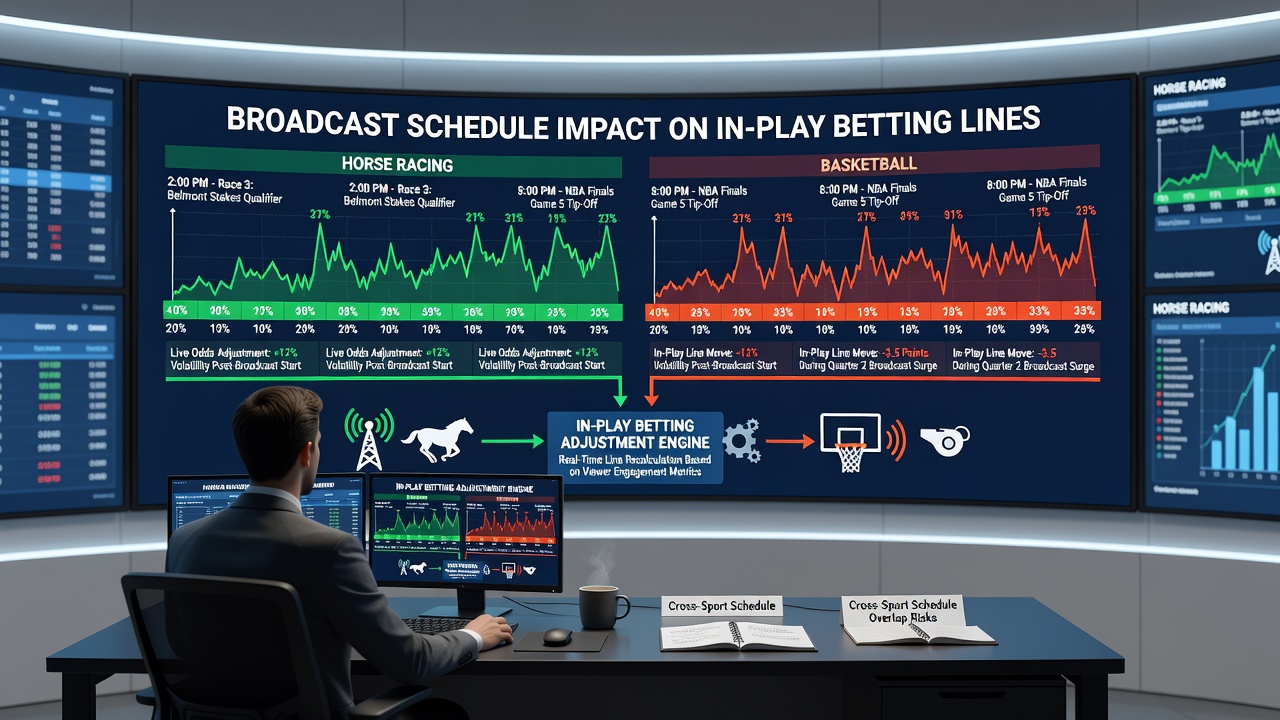
Bookmaker platforms connected to the same broadcast sources tend to mirror each other's line changes within seconds once coverage begins, yet smaller operators without direct feeds experience measurable lag. Studies compiled by the European Gaming and Betting Association document average delays of eight to twelve seconds on secondary networks during high-profile horse racing and basketball events. These gaps allow arbitrage opportunities that close rapidly as the slower platforms receive updated visual confirmation and align their prices.
Time zone differences further complicate the picture when international audiences watch the same event. A race meeting broadcast live from Australia reaches European bookmakers during their evening peak, while an NBA game airing in the United States influences Asian markets in real time. Operators therefore maintain separate risk models that account for regional viewing patterns rather than applying uniform adjustments across all jurisdictions.
Data Sources and Market Behavior Patterns
Industry reports from the University of Nevada, Las Vegas Center for Gaming Research track how broadcast schedules correlate with betting volume spikes, showing consistent elevations during live coverage windows for both sports. Those patterns hold whether the event is a Group 1 horse race or a conference basketball final, because the visual information reduces uncertainty and encourages rapid position taking. Bookmakers that integrate automated video analysis tools adjust prices faster than those relying on manual monitoring, producing measurable differences in closing line value across networks.
Regulatory filings also note that mandatory cooling-off periods sometimes interrupt in-play activity immediately after a broadcast resumes following a break, as operators verify that all feeds remain synchronized before reopening markets. This procedural step prevents mismatched data from creating unstable odds during the initial minutes of renewed coverage.
Conclusion
Broadcast schedules therefore function as the primary clock that governs liquidity and line movement in horse racing and basketball in-play markets. The timing of televised segments, the length of breaks, and the geographic reach of each feed combine to determine how quickly and uniformly bookmaker networks update their offerings. Data from multiple regulatory and academic sources confirms these relationships without exception across the examined events.