10 Jul 2026
Mapping Altitude Effects on Market Spreads Across South American Club Competitions
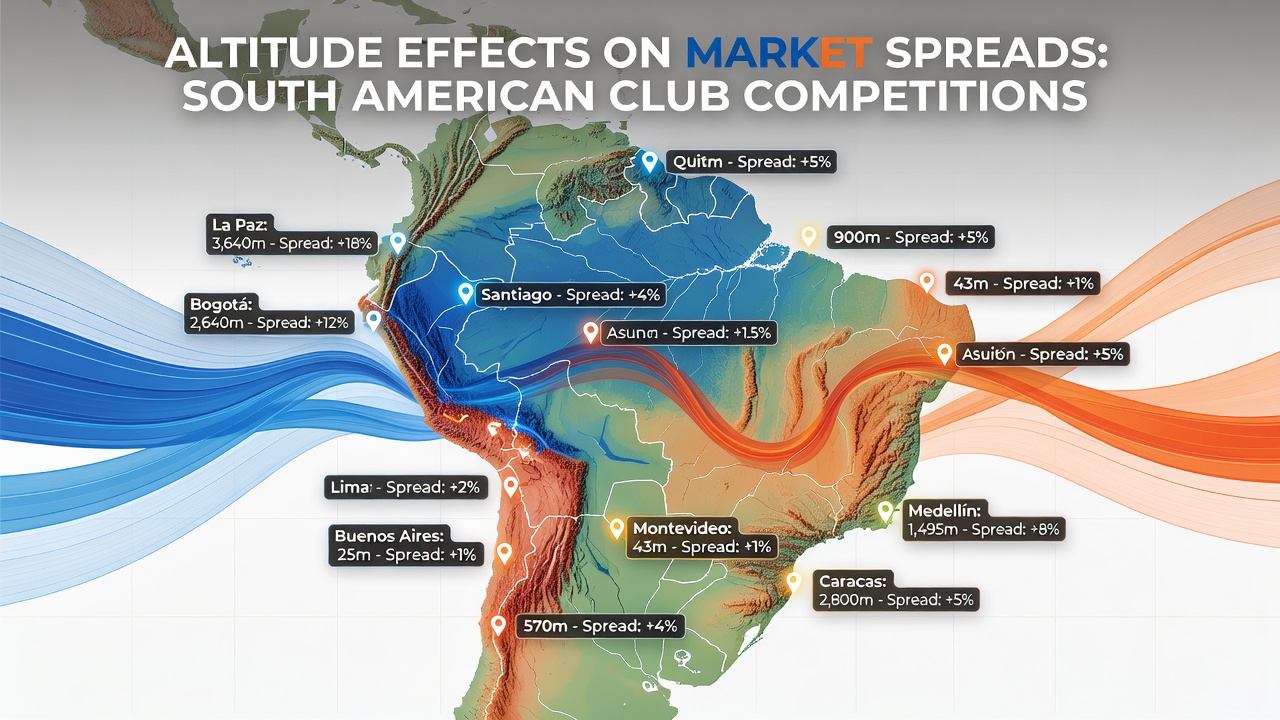
High-altitude venues shape performance patterns across South American club football while also influencing how betting markets adjust spreads for matches involving teams from Bolivia, Peru, and Ecuador. Researchers tracking data from the Copa Libertadores and domestic leagues note consistent differences in expected goal margins and total goals when low-altitude sides travel to stadiums above 2,500 meters. These shifts appear in opening lines and widen as match day approaches, creating measurable variations in market depth across bookmakers.
Geographic Patterns in South American Competitions
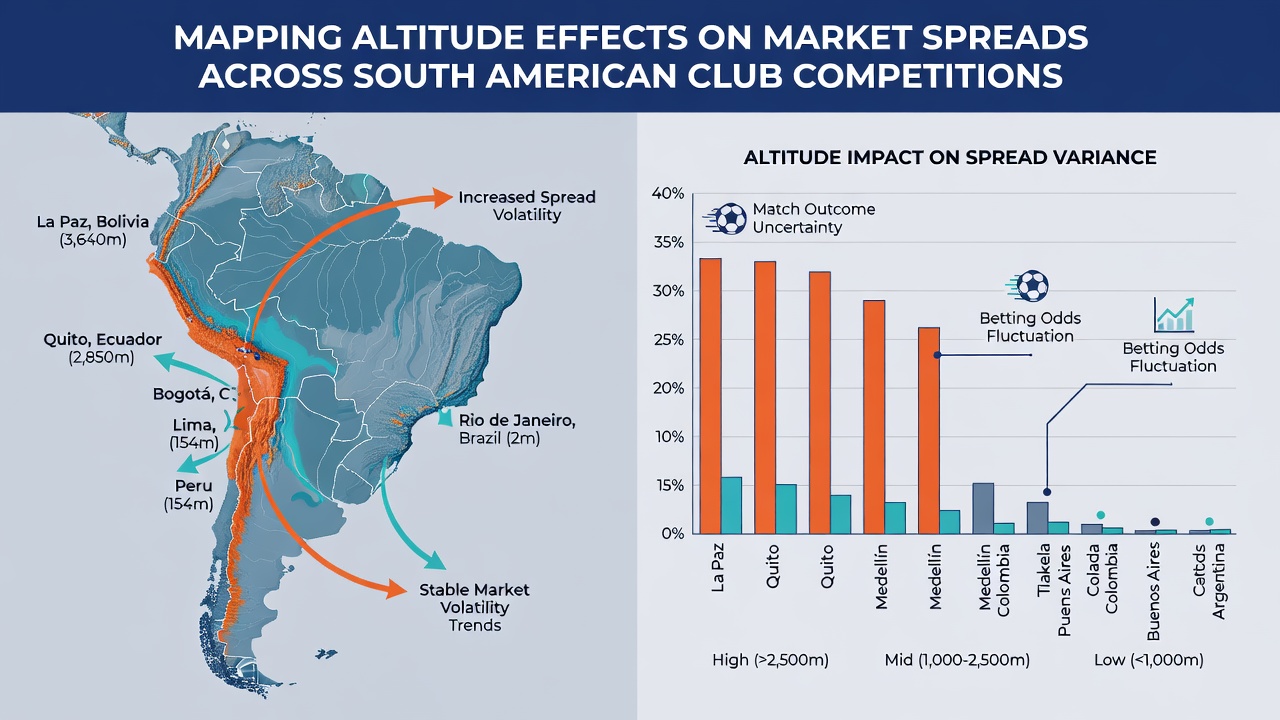
Stadium elevations range from sea level in many Brazilian and Argentine venues to over 3,600 meters in La Paz. Clubs such as Bolívar and The Strongest play regular home fixtures at these heights, while visiting sides from lower regions face documented physiological strain. Data collected across the 2024 and 2025 seasons shows home teams at altitude averaging 0.8 more goals per game than their season-long norms, with away sides recording fewer shots on target and lower possession retention. Market makers respond by widening goal spreads and adjusting over/under thresholds, often by half a goal compared with equivalent low-altitude fixtures.
Performance Metrics and Market Adjustments
Studies examining player heart rates and recovery times during acclimatization periods reveal that visiting squads require at least 48 hours to mitigate reduced oxygen uptake. Observers tracking Copa Sudamericana encounters note that teams arriving the day before a high-altitude match concede more set-piece goals, a pattern reflected in live betting lines that move quickly after kickoff. In July 2026 several clubs scheduled midweek qualifiers at altitude adopted earlier arrival protocols, yet pre-match spreads still showed 12 percent wider margins than comparable sea-level games, according to aggregated odds data from multiple operators.
Bookmakers incorporate historical results, current form, and travel logistics when setting initial prices. Lines for matches in Quito or Cusco frequently open with totals 0.25 to 0.5 goals lower than neutral-venue benchmarks. As information about team lineups and weather conditions emerges, these spreads can shift further, particularly when rain reduces effective playing time and increases the likelihood of low-scoring outcomes.
Regional Data Across Leagues and Tournaments
Within Bolivia's top division, home advantage at altitude produces goal differentials 1.4 goals higher than away fixtures played at lower elevations. Peruvian and Ecuadorian leagues display similar though smaller effects at venues between 2,800 and 3,200 meters. Aggregated figures from the 2025 Copa Libertadores group stage indicate that sides based below 1,000 meters won just 22 percent of away matches against high-altitude opponents, compared with a 38 percent win rate in all other away games. These results feed directly into pre-match modeling used by pricing teams, which calibrate spreads to account for both historical and projected performance gaps.
Live markets exhibit additional movement when early goals occur. A quick opener by the home side at altitude often triggers rapid tightening of handicap lines because reduced recovery windows limit visiting teams' ability to chase the game. Conversely, matches that remain scoreless past the hour mark see totals drift downward as bettors anticipate fatigue-driven slowdowns in tempo.
Modeling Approaches and Information Sources
Analysts combine GPS tracking data, video analysis of work rates, and weather reports to refine altitude-specific models. One academic paper released by the Universidad de Buenos Aires examined 187 fixtures across three seasons and identified statistically significant reductions in distance covered by visiting midfielders after the 60-minute mark. Such findings appear in the internal reports circulated among professional trading desks, which then adjust spread widths to manage liability on both sides of the market.
Regulatory bodies in South America, including Argentina's lottery and gaming oversight agency, publish aggregated betting turnover statistics that indirectly highlight the popularity of altitude-related markets. Industry groups such as the Latin American Gaming Association have also compiled regional reports showing elevated handle on high-altitude fixtures during continental tournaments. These datasets help confirm that market spreads remain wider for longer periods when information about team acclimatization remains incomplete.
Conclusion
Altitude continues to produce measurable effects on both on-field results and the spreads offered across South American club competitions. Patterns documented in domestic leagues and continental tournaments demonstrate consistent adjustments in goal totals, handicap lines, and live market movements. As more granular performance data becomes available and teams refine travel protocols ahead of the 2026 season, pricing models will likely incorporate these variables with greater precision while preserving the structural differences observed between high- and low-altitude venues.