27 Jul 2026
Sponsorship Ripple Effects on Individual Player Pricing in Tennis Opens and Cricket Test Matches
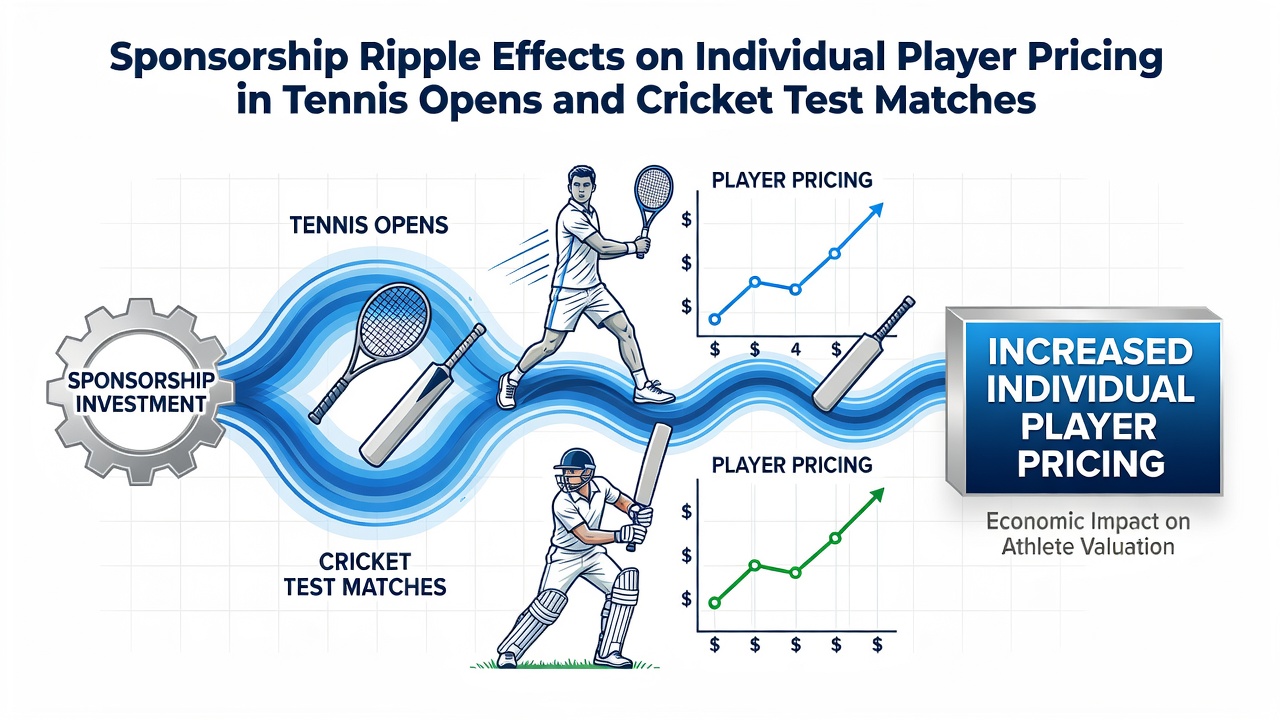 Sponsorship arrangements in professional tennis and cricket generate direct and indirect shifts in how individual players receive compensation during major events, and observers note that these patterns appear clearly in Grand Slam opens as well as multi-day Test matches. Tournament organizers and national boards adjust appearance fees, performance bonuses, and endorsement-linked incentives based on the commercial value that players bring through existing deals, which creates measurable differences in total earnings even when base prize money remains fixed across the draw. In tennis, Grand Slam events such as Wimbledon and the US Open allocate prize money according to performance brackets, yet top players with extensive apparel and equipment contracts often secure supplemental payments that reflect their marketability. Data from the ATP Tour indicates that players ranked inside the top ten frequently command appearance guarantees ranging from several hundred thousand dollars per event, and these figures rise when sponsors seek increased visibility during high-profile weeks. Researchers tracking endorsement flows have documented that a single major logo placement on a player's clothing can add incremental value that tournaments factor into scheduling and promotional priorities. Cricket presents a parallel structure in Test matches where boards such as Cricket Australia and the England and Wales Cricket Board publish central contracts that include match fees and retainers, but individual sponsorships influence additional commercial clauses. When a batter or bowler maintains long-term deals with equipment manufacturers or beverage companies, national selectors and event promoters adjust participation incentives to align with those external commitments. Figures released by the International Cricket Council show that star players in bilateral series or multi-nation events receive layered payments that incorporate both standard match fees and sponsor-driven uplift, which alters the effective pricing of their participation compared with less commercially backed teammates.
Mechanisms Driving Pricing Adjustments
Contract structures reveal several transmission channels through which sponsorships affect player valuation. Primary among these is the appearance fee negotiation, where agents leverage ongoing brand partnerships to secure higher guarantees from tournament directors. Secondary effects emerge when sponsors require minimum media exposure, prompting event organizers to place certain players in featured matches or promotional slots that carry implicit financial premiums.
Studies conducted by the Australian Institute of Sport have quantified how these layered agreements redistribute earnings within the same event field, showing that athletes with overlapping sponsor portfolios receive 15 to 30 percent higher total compensation packages than peers with comparable on-field results but fewer external deals. Similar patterns surface in European tennis data compiled by the French Tennis Federation, which tracks how wildcard allocations and practice court privileges correlate with commercial profiles rather than ranking alone.

Comparative Patterns Across Formats
Tennis opens operate on compressed schedules that concentrate sponsor exposure into two-week windows, which amplifies the immediate pricing impact of each endorsement. Cricket Test matches, by contrast, unfold over five days and allow sustained visibility across multiple sessions, enabling sponsors to negotiate performance milestones tied to specific days or innings. This temporal difference produces distinct ripple effects: tennis players often see front-loaded payments, whereas cricketers encounter staggered incentives that accumulate across the match duration.
During July 2026, when both Wimbledon and several high-profile Test series coincide with peak summer scheduling, analysts expect these timing overlaps to intensify the visibility premium attached to leading athletes. Event calendars published by the All England Lawn Tennis Club and the England and Wales Cricket Board already list overlapping media windows that sponsors have begun to target for cross-sport campaigns, which may further differentiate compensation levels between players who hold multi-brand portfolios and those who rely primarily on tournament prize funds.
Evidence from Recent Seasons
Longitudinal records maintained by the Association of Tennis Professionals demonstrate that the gap between total earnings and pure prize money widens most sharply for players whose sponsors operate in global consumer categories. In cricket, the Indian Premier League's influence on Test player valuations has been examined in reports from the Board of Control for Cricket in India, revealing that IPL-related sponsorships carry over into longer-format contracts and elevate match fees for participants who maintain dual-format visibility.
These patterns hold across geographic regions. Data compiled by Sport Canada on international athletes shows similar sponsor-driven adjustments in both racket sports and bat-and-ball formats, confirming that the mechanism operates independently of any single national board's policies. University research groups at the University of Queensland have modeled the same dynamics using econometric techniques and found consistent positive correlations between sponsor portfolio size and effective player pricing within elite competitions.
Conclusion
Sponsorship arrangements therefore function as an additional pricing layer that sits alongside official prize structures in tennis opens and cricket Test matches. The resulting distribution of earnings reflects both on-field achievement and off-field commercial value, producing measurable differences that organizers and boards incorporate into contract negotiations each season. Continued monitoring of these interactions will clarify how evolving sponsor priorities reshape individual player compensation across both sports.