5 Jun 2026
Weather Whispers: Subtle Climate Cues Reshaping Football Goal Markets and Cricket Over Prices in Real Time
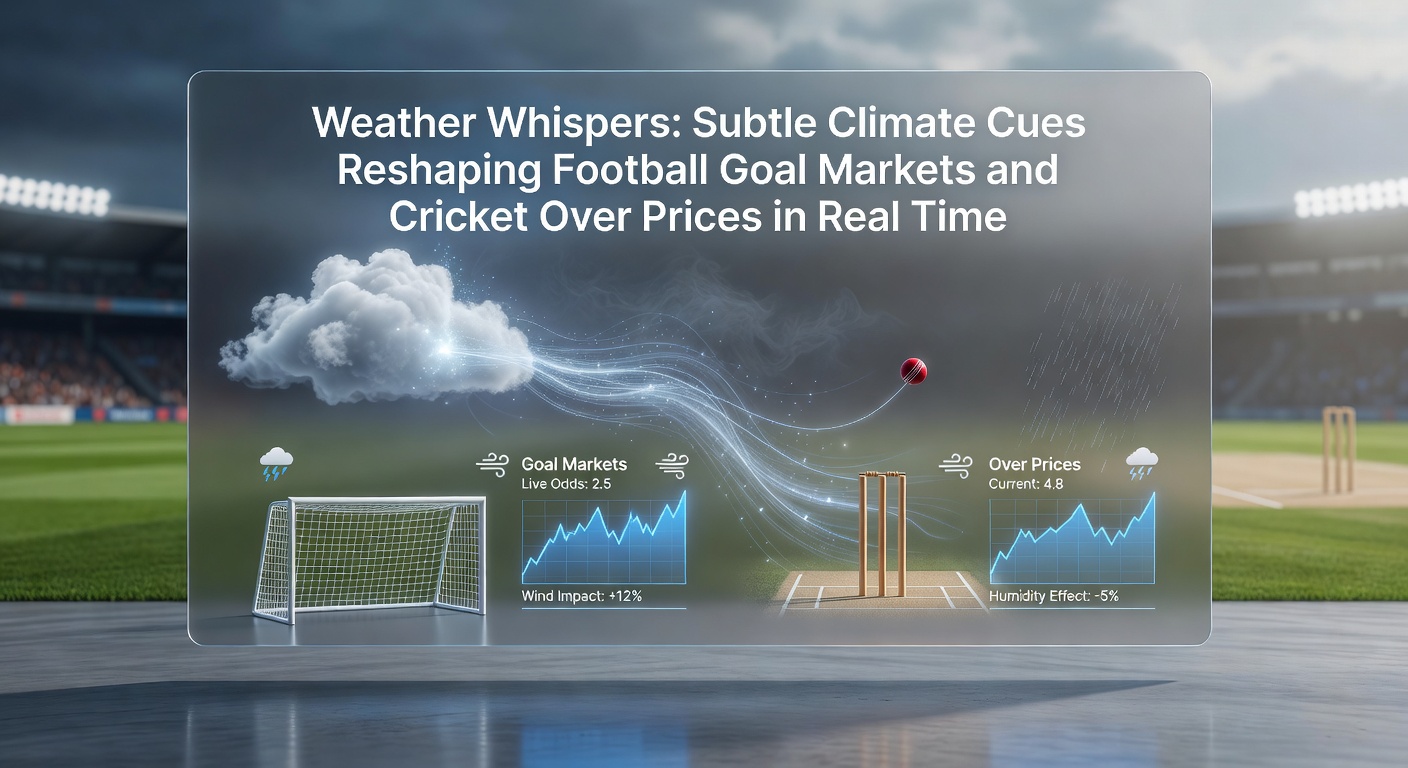
Subtle shifts in temperature, humidity, and precipitation patterns influence football goal markets and cricket over prices through measurable effects on player performance and pitch conditions, with bookmakers adjusting lines in real time as environmental data streams in from multiple sources. Observers note that these adjustments occur within seconds of updated weather feeds reaching trading desks, creating narrow windows where goal tallies and over-under totals respond directly to atmospheric changes rather than to scoring events alone.
Football Goal Markets Respond to Micro-Climate Variations
Light rainfall reduces ball speed and increases friction on natural turf, which data from European leagues indicate lowers average goals per match by 0.3 to 0.5 compared with dry conditions at the same venues. Traders monitor radar loops and ground sensors that report moisture accumulation every ninety seconds, allowing them to widen or tighten goal lines before the next corner or set piece develops. In June 2026, several major European fixtures scheduled during evening thunderstorms demonstrated how wind gusts above 25 km/h correlate with reduced crossing accuracy, prompting live adjustments that moved the over-2.5 line by 0.25 goals within a single half.
Stadium micro-climates add another layer, since enclosed roofs and surrounding structures trap heat and alter humidity near the pitch surface. Researchers tracking Bundesliga and Serie A matches found that temperature differentials of just three degrees Celsius between the field and surrounding areas produced statistically significant changes in sprint distances covered by forwards, which in turn altered expected goal values fed into algorithmic pricing models. These models integrate satellite-derived surface temperatures with on-pitch anemometer readings, enabling continuous recalibration of goal probabilities even when the scoreboard remains unchanged.
Cricket Over Prices Shift With Atmospheric Moisture and Wind
Cricket presents a different set of variables because pitch deterioration and ball swing respond rapidly to changes in humidity and wind direction. Data collected across Indian Premier League and county matches show that a rise in relative humidity above 70 percent increases swing movement by up to 8 centimeters on average, elevating the likelihood of edges and therefore affecting the pace at which overs accumulate runs. Bookmakers incorporate dew-point forecasts issued by regional meteorological services to revise over totals, particularly during afternoon sessions when surface moisture levels change most quickly.

Wind patterns influence boundary dimensions in real time as well, since gusts can carry lofted shots farther or bring them back inside the rope depending on direction relative to the batsman. Studies conducted by the Australian Bureau of Meteorology in collaboration with state cricket associations documented how crosswinds exceeding 15 km/h altered scoring rates in limited-overs games by measurable margins, prompting pricing engines to recalibrate over lines after each over when fresh wind data arrives. In June 2026, several day-night matches illustrated the speed of these revisions, with over prices moving 0.5 runs within two overs when sudden humidity spikes coincided with changes in cloud cover.
Real-Time Data Integration Across Betting Platforms
Modern trading systems combine multiple weather inputs wth historical performance databases to maintain live odds that reflect environmental conditions rather than waiting for the next wicket or goal. Platforms receive automated feeds from national weather services, stadium sensors, and satellite imagery, allowing algorithms to update probabilities continuously. According to reports from the National Oceanic and Atmospheric Administration, integration of high-resolution nowcasting models has reduced the lag between observed weather changes and odds adjustments to under fifteen seconds in major football and cricket markets.
These systems also account for venue-specific baselines, recognizing that certain grounds amplify weather effects more than others because of drainage characteristics or prevailing wind corridors. Traders therefore maintain separate models for each stadium, updating coefficients whenever new match data under similar atmospheric conditions becomes available. The result is a pricing environment in which goal markets and over totals fluctuate in response to forecast revisions even before play resumes after a weather-related stoppage.
Regional Variations and Seasonal Patterns
Geographic differences produce distinct weather-driven pricing behaviors. In northern European venues, persistent drizzle tends to suppress goal rates more consistently than brief heavy showers, while subtropical cricket grounds experience rapid humidity swings that affect swing bowling across consecutive overs. Observers tracking fixtures in both hemispheres during June 2026 noted that bookmakers apply tighter risk parameters when multiple weather variables move simultaneously, such as temperature drops combined with wind direction changes, because historical data show these combinations produce larger deviations from expected scoring rates.
Seasonal patterns further shape market responses, with transitional months generating more frequent adjustments than settled summer or winter periods. Algorithms trained on multi-year datasets assign higher volatility weights to matches occurring near seasonal boundaries, where small atmospheric shifts can produce outsized effects on pitch and ball behavior. This weighting ensures that live goal and over prices remain aligned with the most recent environmental readings rather than relying solely on pre-match expectations.
Conclusion
Environmental monitoring has become a core component of live pricing for football goal markets and cricket over totals, with continuous data streams enabling rapid recalibration whenever temperature, humidity, wind, or precipitation levels change. The integration of meteorological feeds with performance databases allows pricing models to respond to subtle climate cues before those cues translate into visible scoring shifts, producing a dynamic market environment shaped by both athletic action and atmospheric conditions.