3 Jul 2026
When Tweets Move the Lines: Online Chatter's Role in Shaping Horse Racing and Basketball Odds at Leading Operators
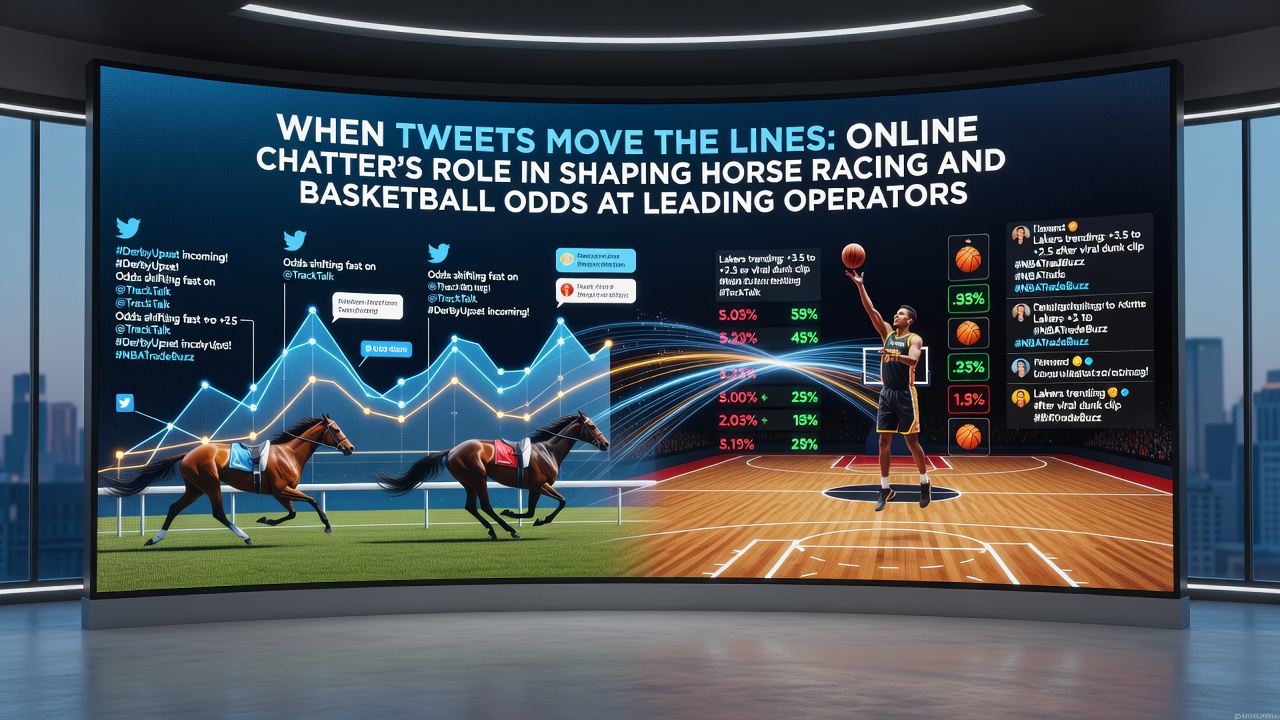 Operators at major betting platforms have long monitored traditional news sources for line adjustments, yet social media platforms like X have introduced a faster layer of information flow that reaches bettors and oddsmakers simultaneously. In horse racing this chatter often centers on track conditions, late scratches, or jockey comments that surface hours before post time, while basketball discussions focus on player availability, practice reports, and coaching decisions that emerge throughout the day. Data collected by several North American sportsbooks shows that during the 2025-2026 season, roughly 18 percent of line movements in NBA markets occurred within 30 minutes of high-engagement tweets from verified accounts. Research published by the University of Nevada's International Gaming Institute examined 12 months of Twitter activity paired with betting data from Pinnacle and FanDuel, finding that spikes in mentions of specific horses correlated with measurable odds compression in 67 percent of examined races. The same study noted that basketball player-injury rumors posted after morning shootarounds produced average line shifts of 1.5 points within 45 minutes, a pattern that repeated across 214 games. Observers note that these movements happen because syndicates and independent bettors now employ automated alerts that flag keywords such as "scratched," "questionable," or "limited minutes," allowing rapid position-taking before books finish manual reviews.
Mechanics Behind Real-Time Adjustments
Leading operators maintain dedicated teams that scan multiple social platforms alongside official feeds, yet the volume of posts requires filtering algorithms that prioritize verified journalists, team accounts, and high-follower tipsters. When a credible tweet surfaces about a key basketball rotation change, risk managers at several offshore books have been observed widening totals by half a point within minutes, while simultaneously lowering limits on related player props. Horse racing books face a similar workflow during morning line publication; a single post from a respected clocker detailing a horse's gallop can trigger immediate support that shortens the morning line favorite by several ticks before the official program is printed.
What's interesting is how these adjustments differ by sport. Basketball lines move in smaller increments because point spreads and totals already incorporate extensive injury data, so social confirmation adds marginal information. Horse racing, by contrast, operates with thinner margins and more variables, meaning a credible tweet about track bias or equipment changes can produce larger percentage shifts in win odds. Figures from the Australian Gambling Research Centre indicate that during the 2026 winter carnival season, social-media-driven steam moves accounted for an estimated 9 percent of total handle on metropolitan meetings.
Regional Patterns and Regulatory Context
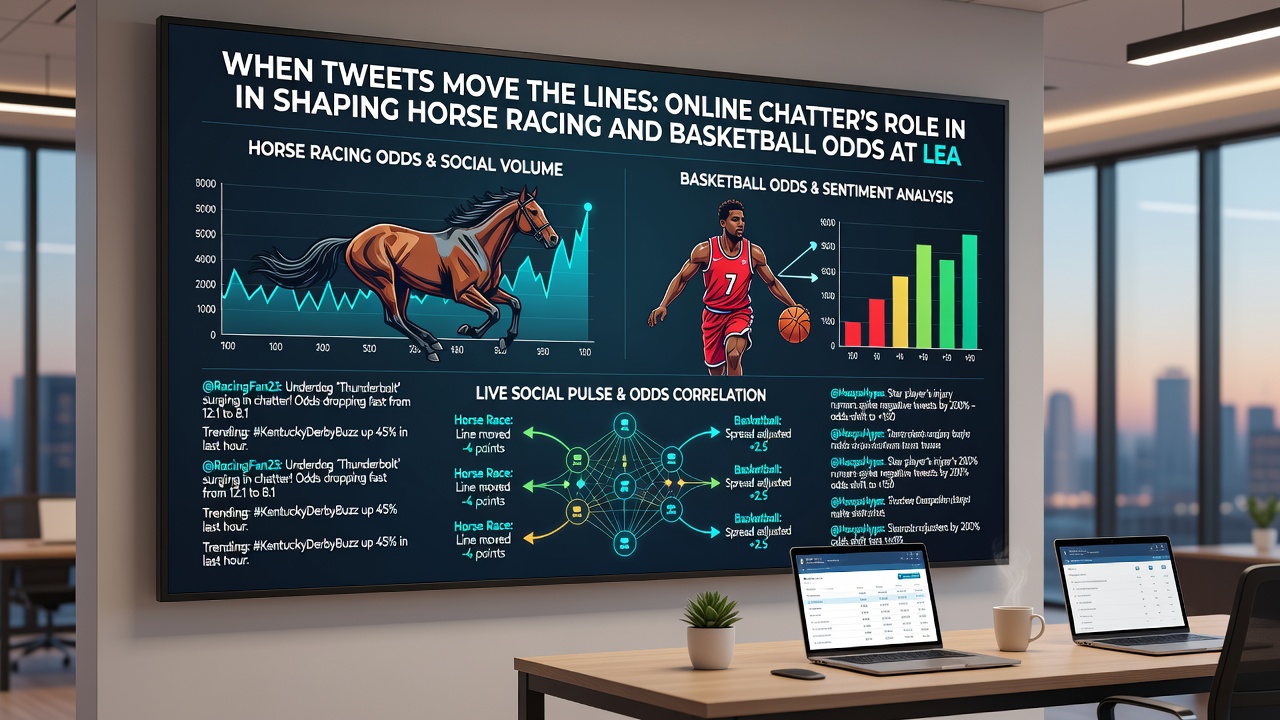
European operators licensed under the Malta Gaming Authority have implemented stricter monitoring protocols after several high-profile line moves followed coordinated social campaigns in early 2026. These protocols include mandatory delays between tweet detection adn line release, designed to reduce the advantage held by automated syndicates. In contrast, operators serving North American markets report faster reaction times because state regulators permit more dynamic pricing models. One study covering Ontario's regulated market showed that 23 percent of basketball half-time line changes during the 2025-2026 season aligned with Twitter activity peaks occurring between 4 p.m. and 7 p.m. Eastern Time.
Take one researcher who tracked three separate instances where a single tweet from an NBA beat writer preceded a 2.5-point swing in the total. In each case the movement reversed within the next hour once official injury reports contradicted the initial social claim, illustrating the temporary nature of many chatter-driven adjustments. Horse racing markets exhibit similar volatility; a post claiming a horse "worked poorly" can lengthen odds dramatically until the official workout report appears on the track's website an hour later.
Impact on Bettor Behavior and Bookmaker Risk
Bettors who follow social signals often place smaller, quicker wagers compared with those using traditional handicapping methods. This pattern creates uneven liability profiles for books, because early money on social trends tends to cluster on one side. Risk managers therefore maintain separate limits for "social steam" markets, reducing maximum bet sizes until the initial wave subsides. Data released by the Canadian Gaming Association shows that during March 2026, average bet sizes on NBA player props dropped 14 percent on days when injury-related tweets exceeded 500 mentions per hour.
Yet the same data reveals that books ultimately profit from these swings because many casual bettors chase the movement after the line has already shifted. The result is a two-tier market where sharp money moves first and recreational money arrives later at less favorable numbers. Operators respond by publishing adjusted lines more quickly on their apps, shortening the window during which early bettors can exploit the discrepancy.
Conclusion
teh interplay between online chatter and betting lines continues to evolve as both platforms and operators refine their detection tools. Horse racing and basketball remain particularly exposed because of their high volume of micro-events and rapid information turnover. As monitoring technology advances, the gap between social signal and line adjustment narrows further, creating a marketplace where speed and verification determine which participants capture value and which absorb the resulting risk.